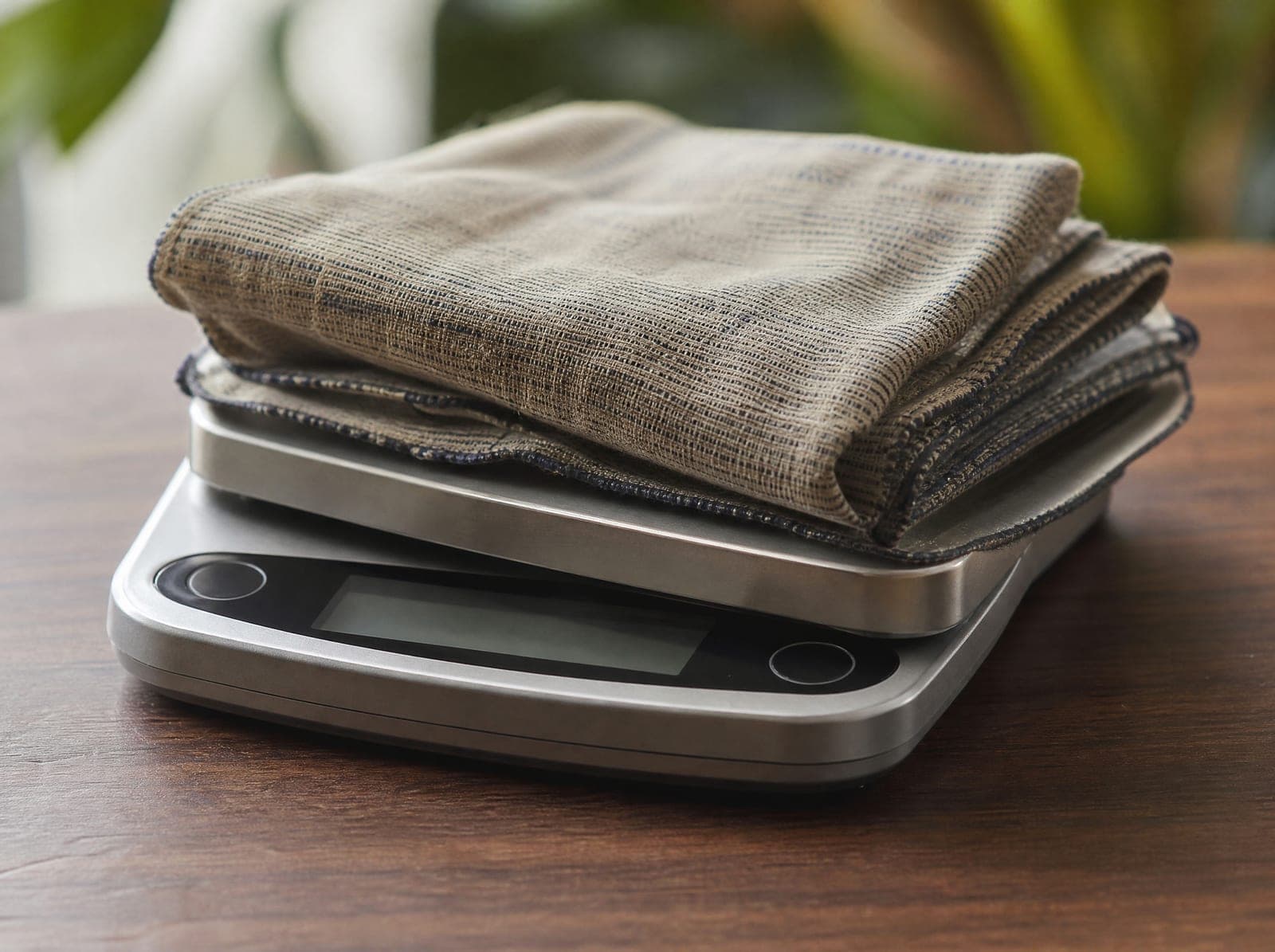
GSM means grams per square meter. It is the weight of one square meter of fabric, and it is the quickest way to compare two fabrics before you see them. Heavier fabric is usually thicker, more opaque and more durable. Lighter fabric is cooler and drapes more, but it can turn see-through when stretched.
Typical weights by product
- Leggings and bras: about 220 to 280 GSM is the common range for opaque, supportive nylon-spandex or poly-spandex.
- Light running tights and summer styles: about 180 to 220 GSM.
- Compression wear: about 240 to 320 GSM, because the fabric has to hold its shape under tension.
- Mesh and performance tees: about 100 to 160 GSM.
- French terry: about 240 to 320 GSM. Fleece for hoodies: about 280 to 360 GSM.
These are typical industry ranges. Suppliers and brands do not all use the same numbers, so treat them as a starting point and check real swatches.
Why GSM alone is not enough
Two fabrics at the same GSM can feel very different. Fiber, knit construction and finishing all change opacity and feel. A tightly knit double-knit at 220 GSM can be more opaque than a loose single jersey at 250. Always judge a fabric by stretching it over your hand in good light, not by the number alone.
How to choose
Start with the product and the feel you want. For squat-proof leggings, begin around 230 to 280 GSM and run the stretch test on every sample. For tops and shorts, go lighter. Order a swatch kit to compare weights side by side before you sample.